
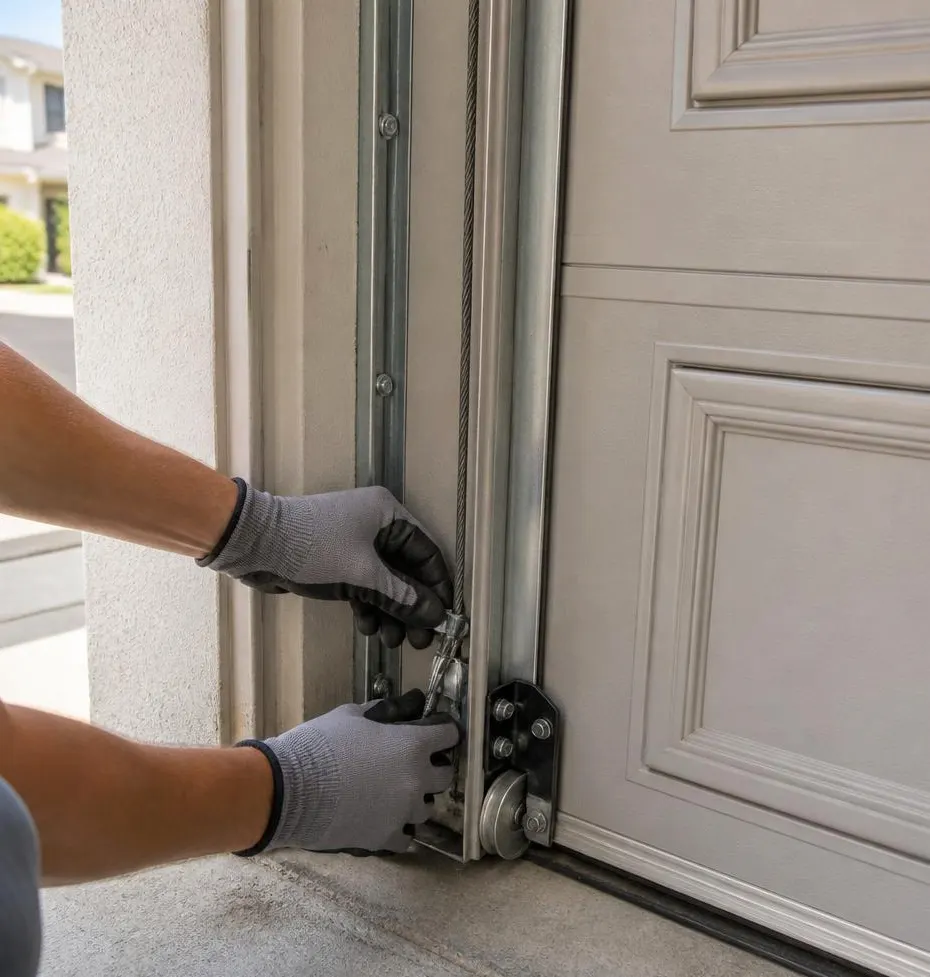
What a Technician Sees on a Typical Fall Call
By late October, the calls start to follow a pattern. A homeowner notices the door is suddenly louder, or it struggles to close all the way, or the opener seems to be working harder than it did in August. Most of the time, nothing actually broke overnight. What happened is that the door's hardware, seals, and springs have been running on summer settings, and the first real cold snap exposed every weak spot that humidity and heat had been hiding. A door that closed quietly in September can start grinding, sagging on one side, or leaving a gap along the bottom once temperatures drop and the metal contracts.
Why the Swing From Fall to Winter Matters Here
Jefferson County doesn't ease into winter. Warm, humid days can give way to frost within a week, and that kind of swing is hard on garage doors. Metal tracks and torsion springs contract in the cold, rubber seals stiffen and crack, and any moisture that worked its way into hinges or rollers during humid months can turn into surface rust once the air dries out and cools. None of this is dramatic on its own, but it adds up, and it's exactly why early-to-mid fall is the right window to get ahead of it instead of waiting for the first hard freeze to show you the problem.
Check the Weatherstripping Before the First Freeze
The rubber seal along the bottom of the door and the vinyl stops along the sides are your main defense against cold air, blowing snow, and the salt and slush that gets tracked in off driveways all winter. Look for seals that are cracked, flattened, or pulling away from the track. If daylight shows through the bottom corners when the door is closed, that's not just a comfort issue — it's an opening for cold drafts, moisture, and small animals looking for shelter. Replacing weatherstripping is inexpensive and usually a same-day fix, but it's much easier to do now than when you're working with frozen fingers in January.
Lubricate Hinges, Rollers, and Tracks
Cold thickens old grease and grime, which means hinges and rollers that squeaked a little in summer can start to bind or stick once temperatures drop. Clean off old dirt and built-up grease with a dry cloth, then apply a silicone-based garage door lubricant to the hinges, rollers, and the torsion spring itself. Avoid WD-40 as a long-term lubricant — it's a solvent that displaces moisture short-term but doesn't hold up well in cold weather. A proper lubrication pass takes fifteen minutes and noticeably quiets a door that's started to groan.
Test the Balance and Watch the Springs
Torsion springs lose a bit of tension as temperatures fall, and a door that was properly balanced in summer can start to feel heavier or close unevenly once it's cold. To check balance, disconnect the opener by pulling the release cord, then lift the door manually about halfway. It should stay in place on its own. If it drifts down or shoots up, the spring tension is off, and that's worth addressing before the cold makes the springs more brittle and more likely to snap under the added strain of a heavier, stiffer door. Spring failure is one of the most common winter emergency calls, and it almost always happens on the coldest mornings, when the metal is least forgiving.
Give the Opener and Sensors a Once-Over
Garage door openers work harder in cold weather, and backup batteries lose capacity faster as temperatures drop — the same reason your car battery struggles on a frigid morning. If your opener has a battery backup, test it now rather than finding out it's dead during a winter power outage. Wipe down the photo-eye sensors near the bottom of the tracks, since dust and cobwebs that built up over summer can cause the door to reverse unexpectedly, and that issue tends to get worse once condensation starts forming on cold sensor lenses.
Think About Insulation if the Garage Connects to Your Home
If your garage shares a wall with living space, an uninsulated door can be a real source of heat loss through the winter, and it also means that attached room — laundry, mudroom, whatever it is — stays colder than the rest of the house. Insulated garage doors or retrofit insulation kits won't turn your garage into a heated room, but they do reduce temperature swings, cut down on condensation, and make the door itself more resistant to warping in extreme cold. It's not a must-do every fall, but it's worth considering if you've noticed the garage-side wall is noticeably colder than the rest of the house in past winters.
When to Call Hillsboro Garage Door
If your door is off-balance, the springs look worn or stretched, or the opener's battery backup won't hold a charge, those aren't fix-it-yourself jobs — a spring under tension can cause serious injury, and guessing at opener wiring usually creates a bigger problem. That's when it makes sense to call in Spring Replacement or Garage Door Opener Repair & Installation from Hillsboro Garage Door. We'll check spring tension, inspect cables and rollers for wear, test the balance properly, and make sure your opener and backup battery are ready for whatever Jefferson County winter throws at them. A Garage Door Maintenance visit now, before the first hard freeze, is usually the cheapest insurance against an emergency call on a ten-degree morning.
If your garage door has started acting up as the weather's turned, give Hillsboro Garage Door a call. We serve Hillsboro, Festus, De Soto, Arnold, Barnhart, Imperial, House Springs, and Cedar Hill, and we'd rather get your door squared away in October than have you stuck outside it in January.